
Paragraph 16
P&F Box Close Reading

The 16th paragraph in Chapter XXVI (Past & Future Box) is only two sentences long. But I feel like there is a lot of potential meaning packed in. Perhaps these shorter paragraphs are meant to contain the signals the author wants us to receive. There are notes about birth years, re-experiencing childhood (time travel / Back to the Future?), and peculiar alliterations.
Let’s start with the first sentence.
It opens with “Because I happen to be a similar age….” I remember in middle or high school being taught to avoid opening sentences with “because.” It’s not grammatically incorrect as long as it is paired with another independent clause (which the author does). But it’s the age connection to both James Halliday (book character) and Ernest Cline (book author) that’s of interest to me right out of the gate. A RPO fan site states that Halliday was born in 1972.

A wikipedia page for Cline suggests he was born in 1972 as well.

Now, the words similar age does not imply to me the same birth year or even being within 1 calendar year. I’d give an margin of 18 months on either side of this range to feel like it could qualify as “similar.” I don’t know if the author ever explicitly shares his birth date, though we know he has a January birthday from a birthstone chapter. So then I’d say he was born in January 1971, 1972, or 1972 most likely. I think this can be helpful to consider what kinds of pop culture and world events might have been going on during his childhood, teenage, and young adult years that also may have influenced his worldview - especially in a chapter that is talking about both past and future.
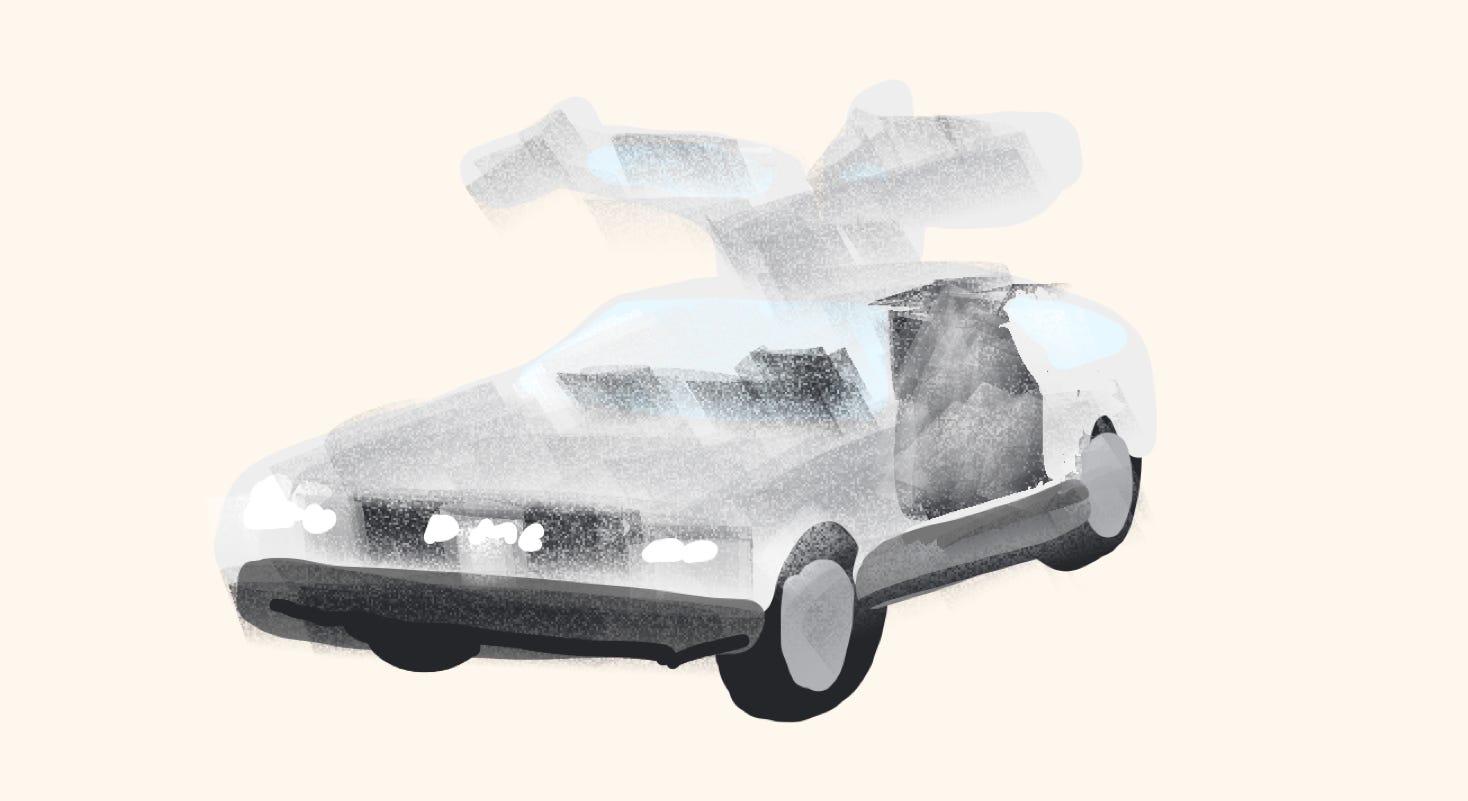
The second half of this first sentence affirms that reading Ready Player One (for TTI’s author) was like re-experiencing childhood. That might be a metaphor for time travel which immediately makes me think of Back to the Future. The DeLorean time travel machine is a major element in the Back to the Future films and is also the vehicle that the RPO protagonist uses in the virtual OASIS world. There has also been a lot of speculation about the original and actual dates of the book’s publication lining up with dates seen in the movies.
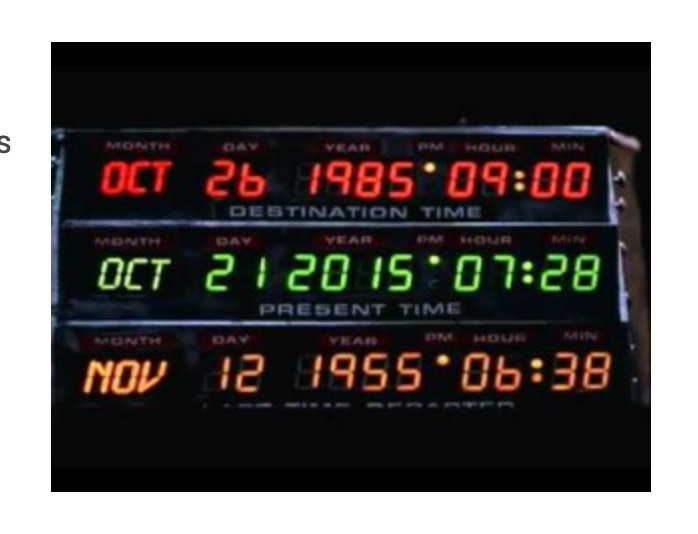
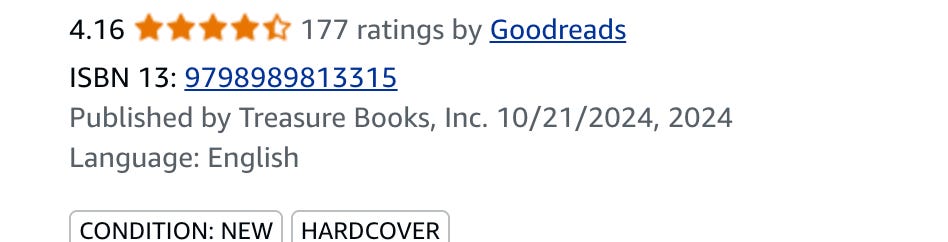
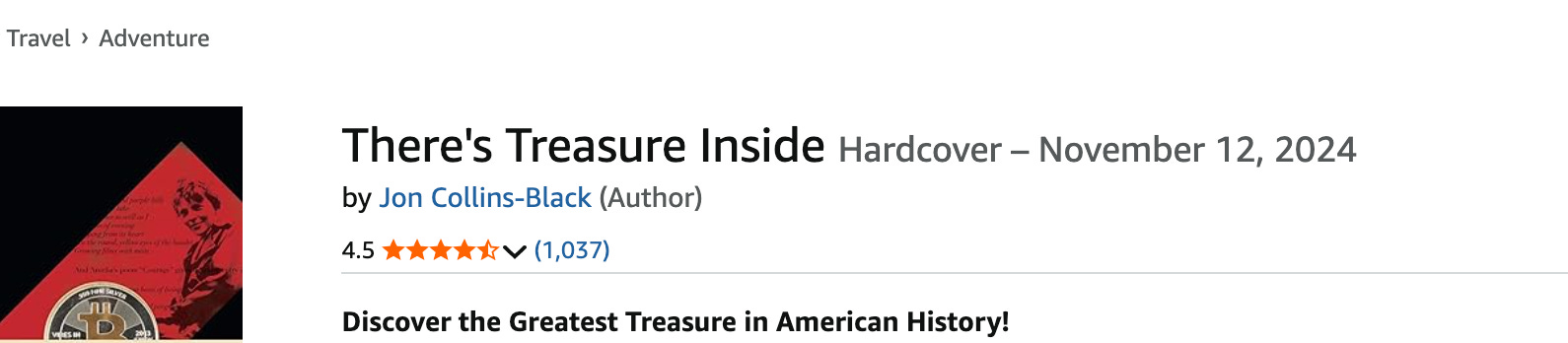
These could all also be Easter eggs (fun connections planted by the author that are not clues), which also would track well with the theme of the chapter.
The first sentence ends with the word “future.”
The second sentence opens by describing the reading experience of RPO - a sci-fi book - being entertaining. One of the reasons is how it has “clues” in it. The other reason is “plot points” which has had my attention because of the potential other meaning. In one context, it can refer to the story of a book or movie and it having key moments (points). In a mathematical context, it can mean finding coordinates on a plane.
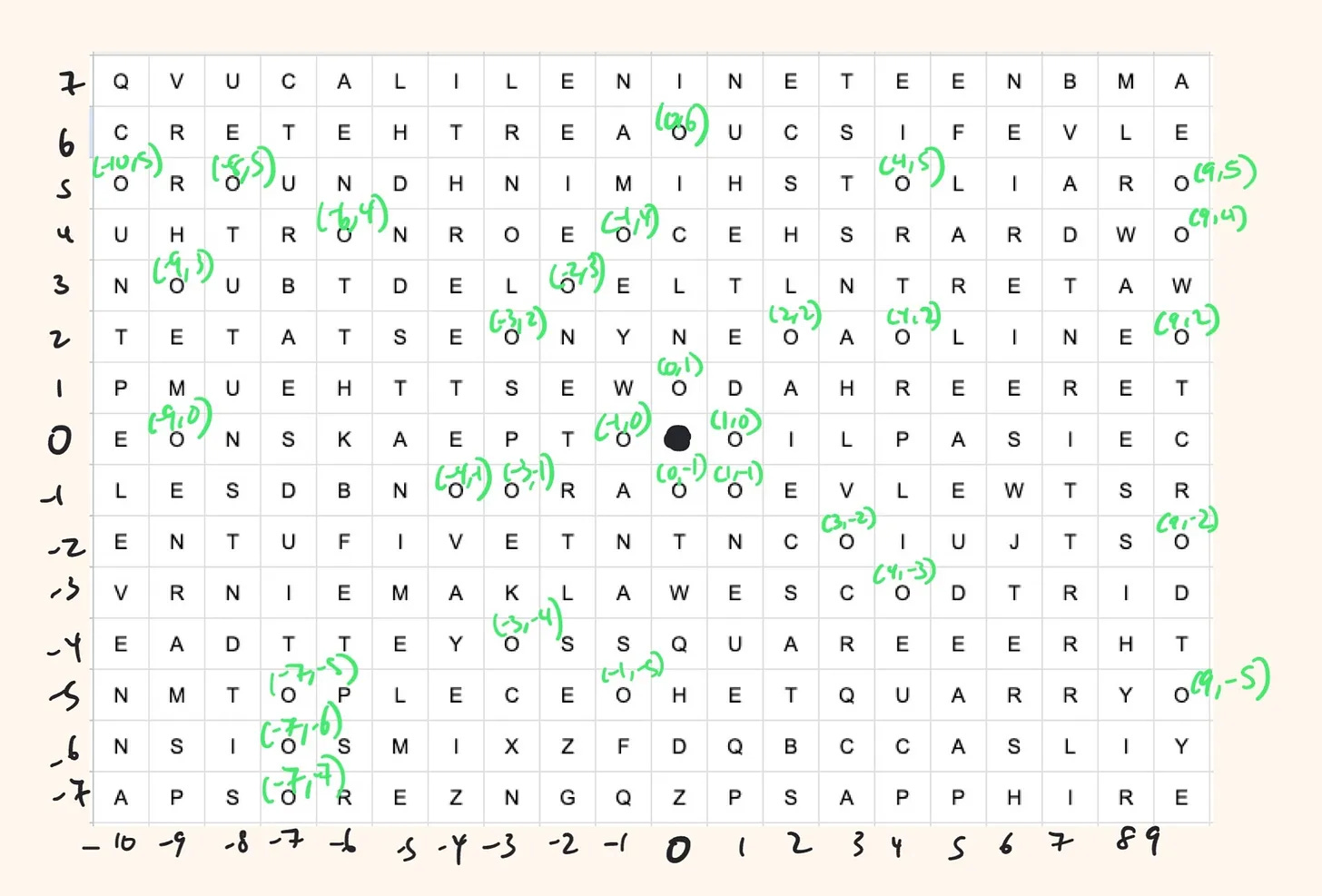
Almost a year ago I did a deeper exploration into this idea - the image above is a attempt at plotting the coordinates of all of the O’s, using the center O in the fross as the origin (0,0). Nothing really came from that for me.
But today I am thinking about the word that follows “plot points” which is “shaped.” Now I am wondering if there are some points to find in the Word Search that when plotted/marked, create some kind of shape. I know we’ve been encouraged to simply find the words on the word search, but there might be something else to do with those words. For example, there are many numbers between 0 and 19. If you treated this just as the positive quadrant of a coordinate plane, your origin would be in the bottom left corner (A). What if using a combination of the numbers found (as words) as coordinates is the way to go?
These are the numbers that I am aware of:
0
3 (x2)
5
9
11
12
19
And then 1 appears as well, but we have been instructed to ignore three letter words. I asked an AI tool to provide me with a list of all of the possible ordered pairs with these numbers:
Starting with 0
(0, 3), (0, 5), (0, 9), (0, 11), (0, 12), (0, 19)

Starting with 3
(3, 0), (3, 3), (3, 5), (3, 9), (3, 11), (3, 12), (3, 19)

Starting with 5
(5, 0), (5, 3), (5, 9), (5, 11), (5, 12), (5, 19)

Starting with 9
(9, 0), (9, 3), (9, 5), (9, 11), (9, 12), (9, 19)

Starting with 11
(11, 0), (11, 3), (11, 5), (11, 9), (11, 12), (11, 19)

Starting with 12
(12, 0), (12, 3), (12, 5), (12, 9), (12, 11), (12, 19)

Starting with 19
(19, 0), (19, 3), (19, 5), (19, 9), (19, 11), (19, 12)
I then asked the tool to try and come up with a plot set that uses the numbers only once (except 3) and see if when lines are connected it makes any kind of recognizable shape or abstract image:
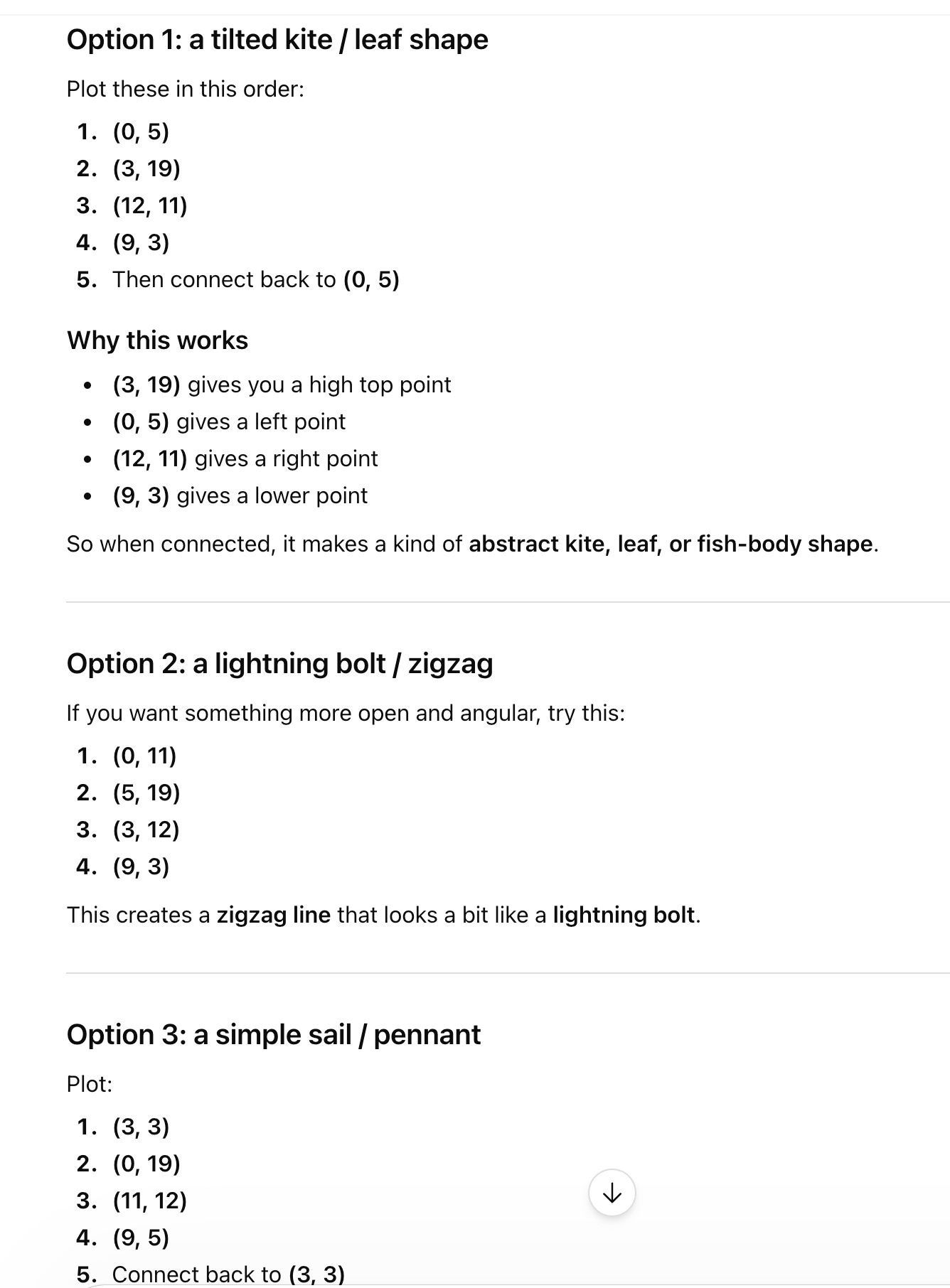
I haven’t bothered to try any of these yet but I may.
Another idea is that it could create the shape or gesture of a trail.
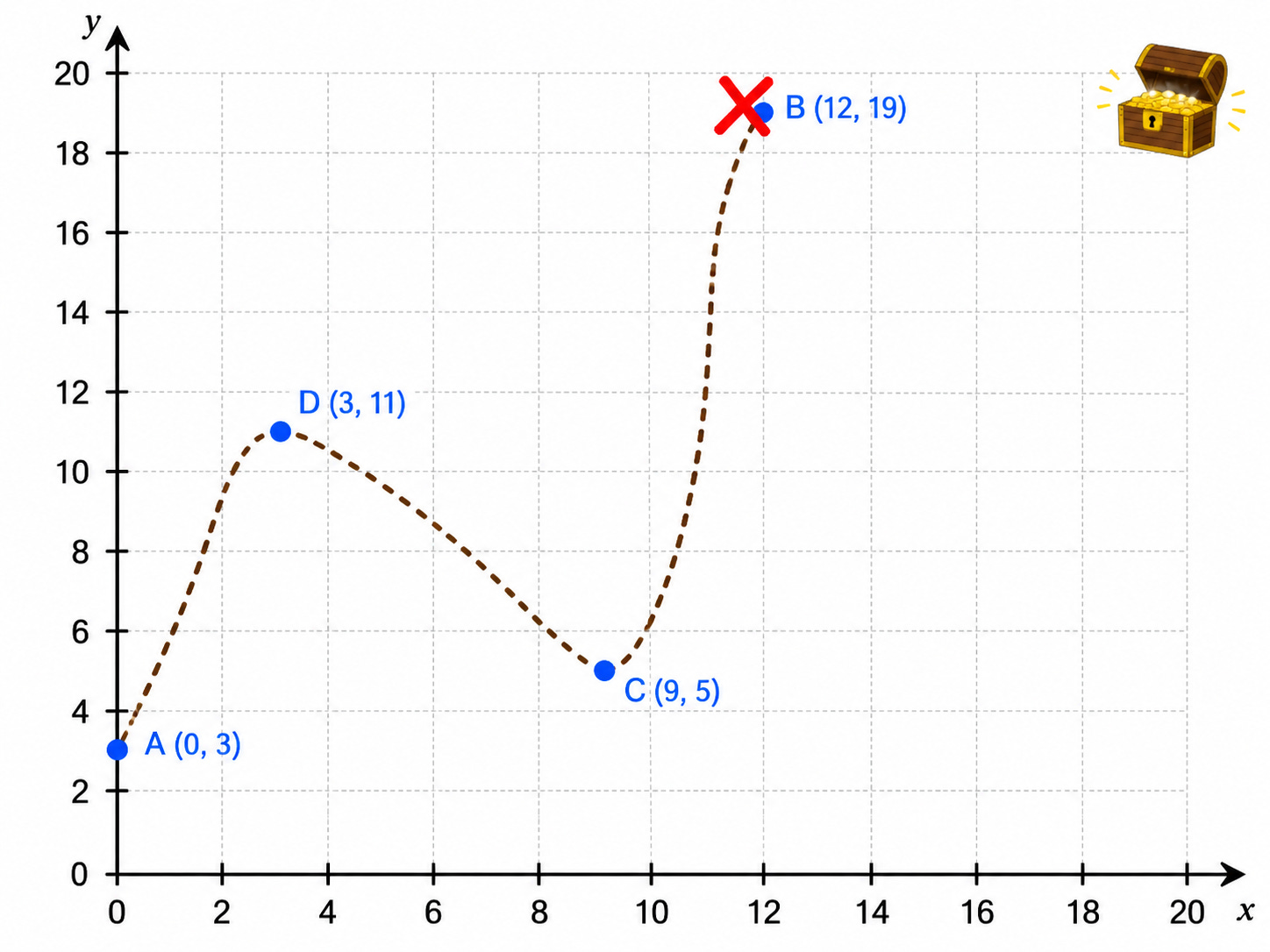
I mentioned how the first sentence ended with “in the future”. This second sentence contains “from the past.” I think it’s the only paragraph in the chapter that has both words past and future, which is another reason I wonder if it’s mean to be a signal for some guidance.
Finally, it closes with the alliterative weird and wondrous (a prior alliteration was plot points). This has stood out to me because the RPO book’s main character is named Wade Watts (double w) and then, when combined with the “sci” of sci-fi, weird made me think of the somewhat raunchy concept 80’s John Hughes film Weird Science which would have hit the theaters when the author was around 13 years old (and this movie was rated PG-13 and probably not something he’d want to see with his parents or grandparents).
Some of these ideas may be stretches, but I also think that from a writing style perspective, these shorter paragraphs both in Part 1 and Part 2 seem to stand out to me.