
Laminated Clues
Another escape room design element

With all of the escape rooms I have done, there is a room/experience design element consistent across all of them. There are some fixed items on the walls of the room, for example a painting, a poster, a mural—basically something large and visually interesting that is not supposed to be moved or removed from its place. In parallel, there is usually one object (or a series of objects) that you find in a locked box/cabinet, scattered throughout the room, etc., that you are meant to use in conjunction with a fixed element. I’ve recently been thinking about TTI in the context of this type of puzzle design and trying to categorize some of the elements in Part 1 in such a way.
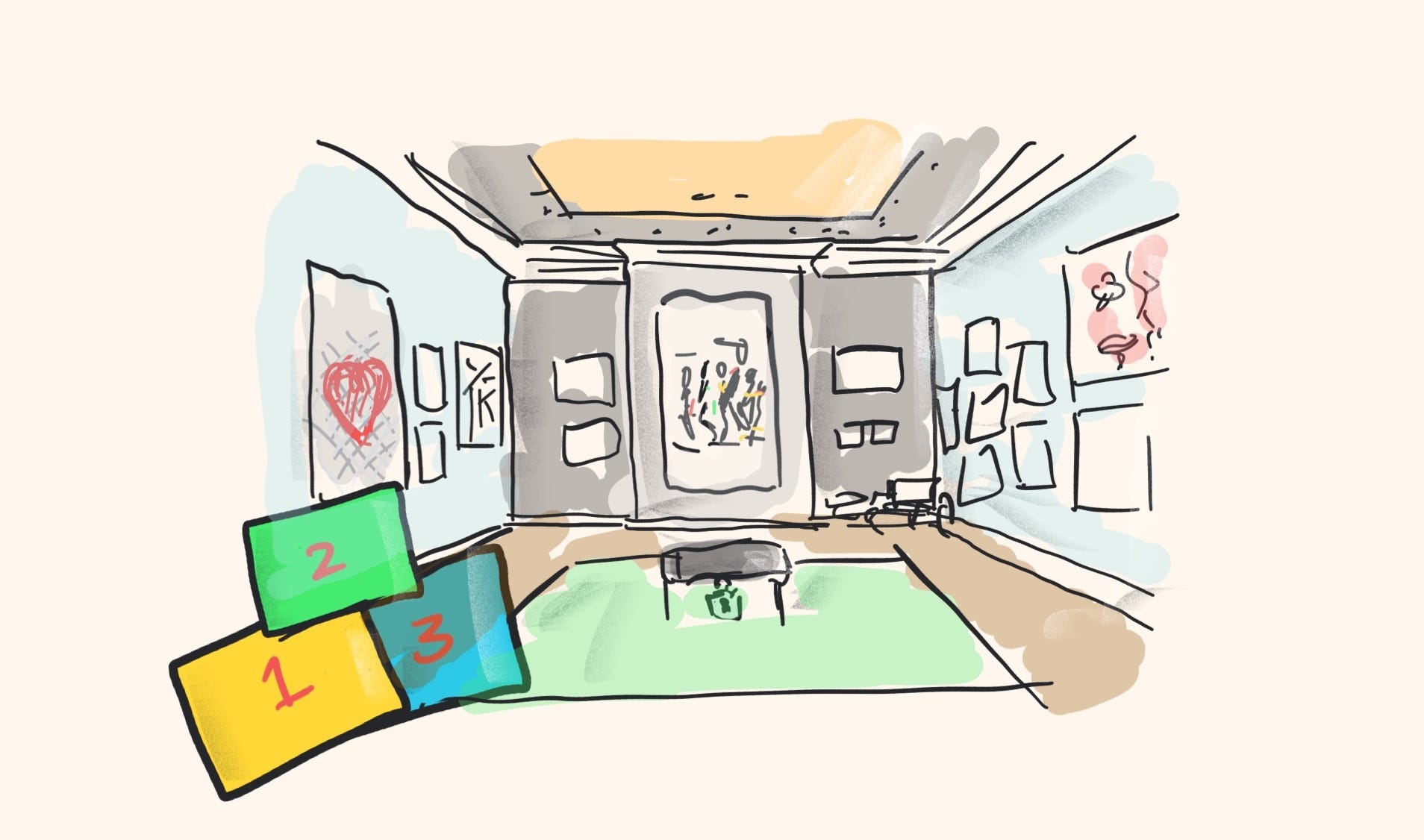
There are two other escape room design elements worth noting. First, whenever there is a clue-item that is paper-based, they are usually laminated so that they can be easily reused when resetting the room for the next guests. I think there is pretty good awareness of the author’s stating that with each of the four smaller boxes he has placed a unique “laminated clue”. I think it’s interesting that he felt the need to point out its being laminated - what different does that make? Unless it signals that things found with and around each Part 2 box might be subject to moisture/rain/water. Regardless, there being a laminated clue tracks well with the escape room design thing in my opinion.
I also did a Part 1 search for the word “laminated” and came across something that I probably would not have recalled otherwise:
“A week later, a friend from across the road came over. She was all excited about showing me a laminated paper she had gotten from the store. She ex- plained it was a birthstone chart, and she told me every calendar month had a gemstone associated with it.”
A laminated birthstone chart is the exact type of clue/decoder I’d expect to come across in a real-life escape room.
The second thing worth noting that I have experienced is that most visual items—whether things fixed on the wall or linked objects found secreted in areas around the room—once used they are no longer needed again. They serve a single purpose for advancing to the next step of the puzzle. With a time-based challenge, this is helpful for moving things along, but I also think it’s just good puzzle design generally. It is very satisfying to complete one part of the challenge and move on to the next part.
So, if I was taking TTI and designing a physical escape room using the visual elements, I would organize things into three categories and go from there:
Fixed on the wall: these are larger images and illustrations which would be blown up and framed on the walls.
Individual laminated item: these would be discrete visual items, locked away in a safe or drawer that needs to be solved first in order to access it.
Series of laminated items: these are a collection of items scattered around the room and/or hidden in some of the locked areas. They are part of a set that needs to be collected in their entirety in order to use them.
Fixed on the wall
Dancers image (Art smith chapter)
Octavio Ocampo surrealist painting
Apotheosis of Hercules painting
Heart AI people gathering (Picasso chapter)
Picasso Painting
Individual laminated item
Olympic Ring logo
Hopi Calendar
GW journal page (“cherry tree”)
Wilma Rudolph photo
Jungle illustration
Series of laminated items
Interesting location photos: Angkor Wat, Chavin de Huantar x2
Inset photos
Border: TN Khmer ring, 3rd Imperial Egg, Chivor emerald, TN Ruby ring, Jackie O photo, Tiffany vase bottom, Nigerian team photo, Gold medal profile, ibex bracelets
No border: Scotty, TN Lotus ring, Lavinsky photo, Loloma ring, Hercules necklace, faience necklace close-up, Tanzanite gem, Nicoya necklace, Michele necklace
Ink illustrations: doorway, bull, falling man, basketball player, stargazing, forest fire, plane, saloon
Other categorization ideas
If they were physical items in the room, I could see that the details on the bottom of the Tiffany Vase and the close-up of the Faience bead necklace would be something you had to look out for. There are definitely times I have experienced in escape rooms where you have to look under an object to find information and to look closely at the details of an object that was found via solving another lock mechanism.
I also think there are variations of the inset photos that could exist. For example, maybe all of the Tuyet Nguyet rings found scattered across Part 1 are meant to be found and assembled together - or at least the ones that are individually shown in an inset. Or, the photos of people could be a series (Scotty, Lavinsky, Onassis, Rudolph).
This type of organization leads me to wanting to match up elements with one another (or a series to an element). I didn’t list the birthstone chart as one of the items, but for example, I definitely think some mashup using the Hopi Calendar, birth stone calendar, and maybe the gems that are shown in inset images could be part of a concrete solve.
I’d be (very!) ok with it if that’s how Part 1 was designed, even if it takes some brute force to find the correct combinations of things to work with.
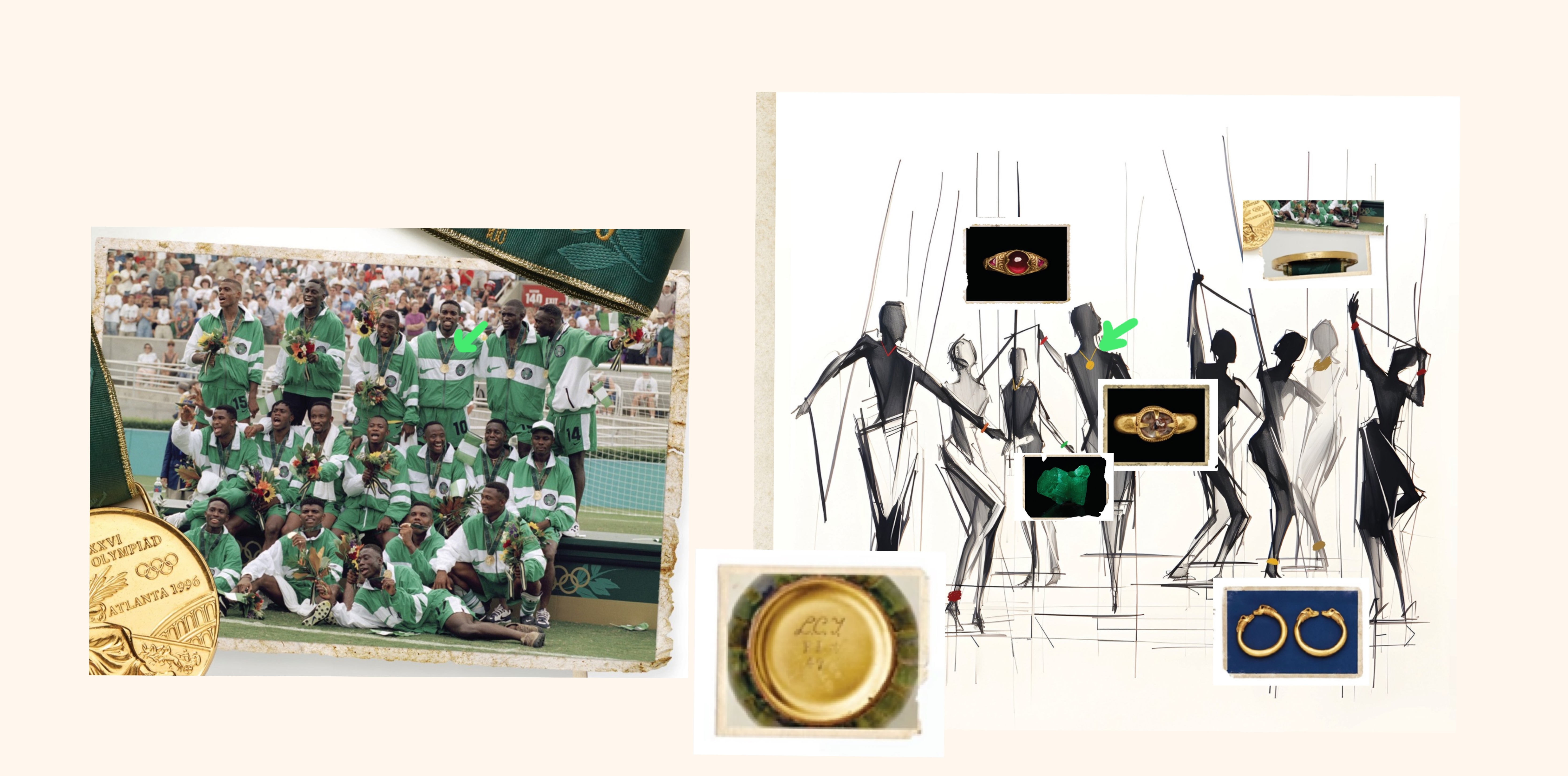
Just as an exercise, I took all of the bordered photographs and then used the dancer’s image as my “wall” photo”. I actually think there is some interesting potential with the colors of the markings/jewelry on the dancers and the colors of the things in the photos. There is also something interesting to me about the dancer with the medallion around their neck and the photo of the Nigerian soccer team.