
Hints and Clues
Guidance in Part 2 Intro?

Every now and then I go back and look at the Forrest Fenn and Pokémon Box chapters because those are the ones that I’ve recently been spending the least amount of time on. I’ve always been mostly focused on the AT Box while also doing some structured exercises with the Part 1 chapters and the P&F Box (e.g, image catalog, clue list, paragraph close reads). This morning when I opened up my eBook version of Chapter XXIV (Forrest Fenn Box), I decided to re-read the Part 2 introduction and one phrase caught my attention: hints and clues.
Of course, this could just be the flowy writing style of the author, but I do wonder if he has some personal distinction between the terms.
The full sentence is:
To organize things, I decided to segregate the hints and clues for four of our boxes into their own individual chapters, leaving the rest of the book solely for the clues to our largest box.
I have felt that his word choice of “segregate,” while technically valid, feels interesting given connotations with some US-not-so-long-ago historical context, some of which is loosely referenced in various chapters in the book (i.e. racism, civil rights). It can certainly be used in a clinical way to describe organizing/isolating objects from a set, and I guess when looking at other synonym choices, “segregate” might actually the best description of his process.
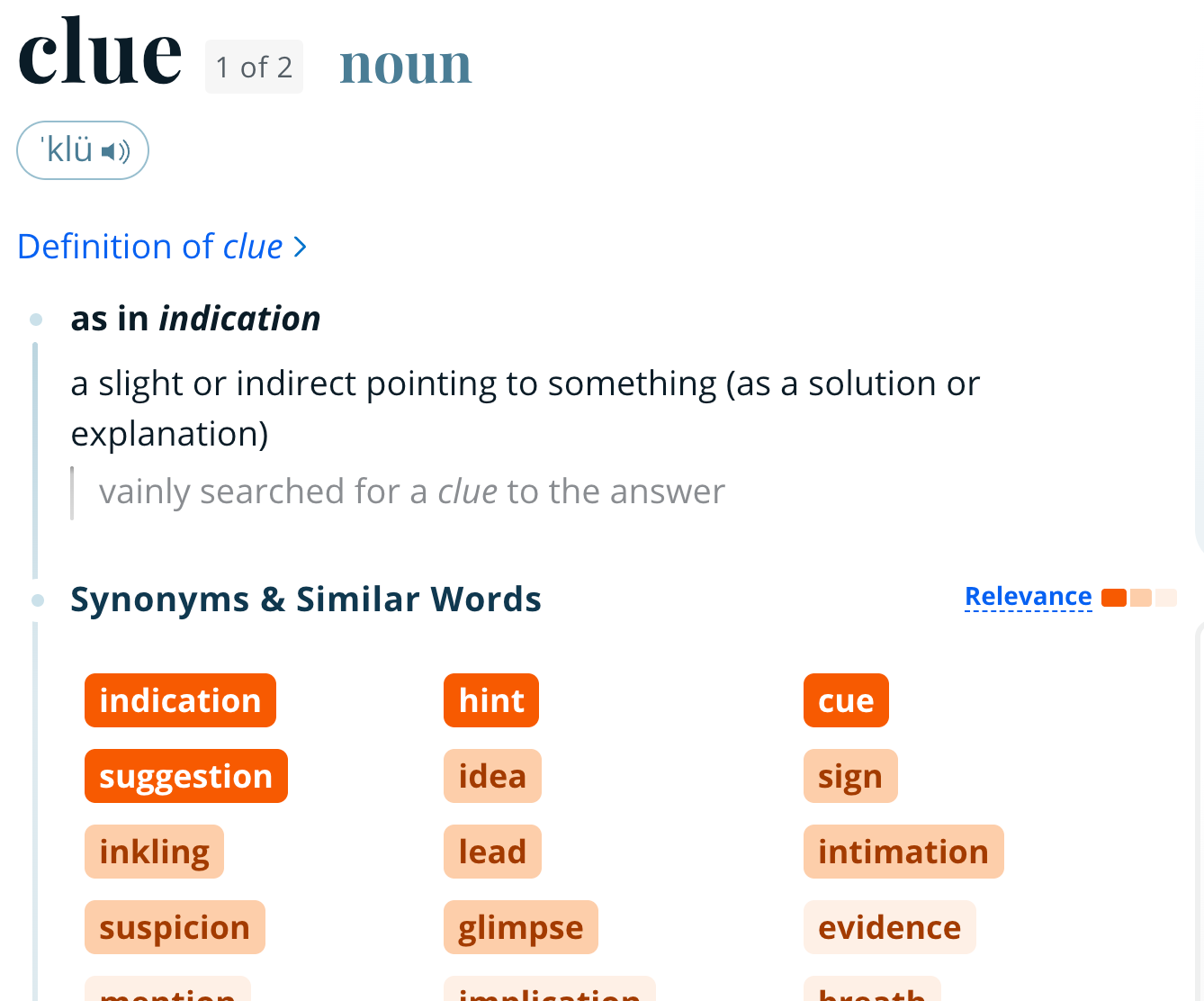
But also from a synonym perspective, “hint” and “clue” can generally be used interchangeably. However in the context of a treasure hunt, I feel like a “clue” could be a more direct indicator of some kind of step or direction, whereas a “hint” may help you identify a clue or make sense of one.
Digging into these semantics may just be overthinking and unnecessary, but when the author states, for example, that all you need is the poem (or something like that) for the Forrest Fenn Box, I take it to mean that all of the “clues” are in the poem. How to find or interpret them (so, “hints”), I wonder if — or perhaps hope — are contained in the chapter. As an example, in the narrative he states:
As you may be curious, I have traveled to all four states in Forrest Fenn’s treasure search area.
I don’t believe he ever wrote the 4 states in the chapter (he mentions north of Santa Fe, NM and in the Rocky Mountains). Taking a perspective of someone coming into this hunt with no prior knowledge of Forrest Fenn’s hunt, I could see this bit of information which sits outside of the poem as being a very important hint. It gives you a region to being with.
For example, the first line of the poem is:
I cruise along a road I know
With the additional information about the states, it can be assumed that this road is in one of the four Fenn states, or at least leads towards one of the four states (like an interstate highway). This all may feel obvious or too simple, but I am finding that stepping back/out in this way might be helpful for me at least to look at the poem and the chapter in a different way.
And this makes me go back to other parts of the Chapter XXIV narrative and wonder if some of the curious sections are hints. I feel unable to let go of the list of alternate/clone careers in the second paragraph (race car driver, mountain climber, monk, paleontologist). The author in a pre-book launch interview shared most of this list in the context of his learning about Forrest Fenn’s treasure.
Certainly these could be prepared talking points or simply things fresh in his mind during the final weeks leading up to publication, but they just feel so specific (especially since he mentions potentially 15 versions of himself, but three of them are the same as in the book).
The second paragraph opens with the line:
Over my life, I have dreamed of different careers.
The first line of the fifth stanza reads:
Near here, it’s nestled all in a dream.
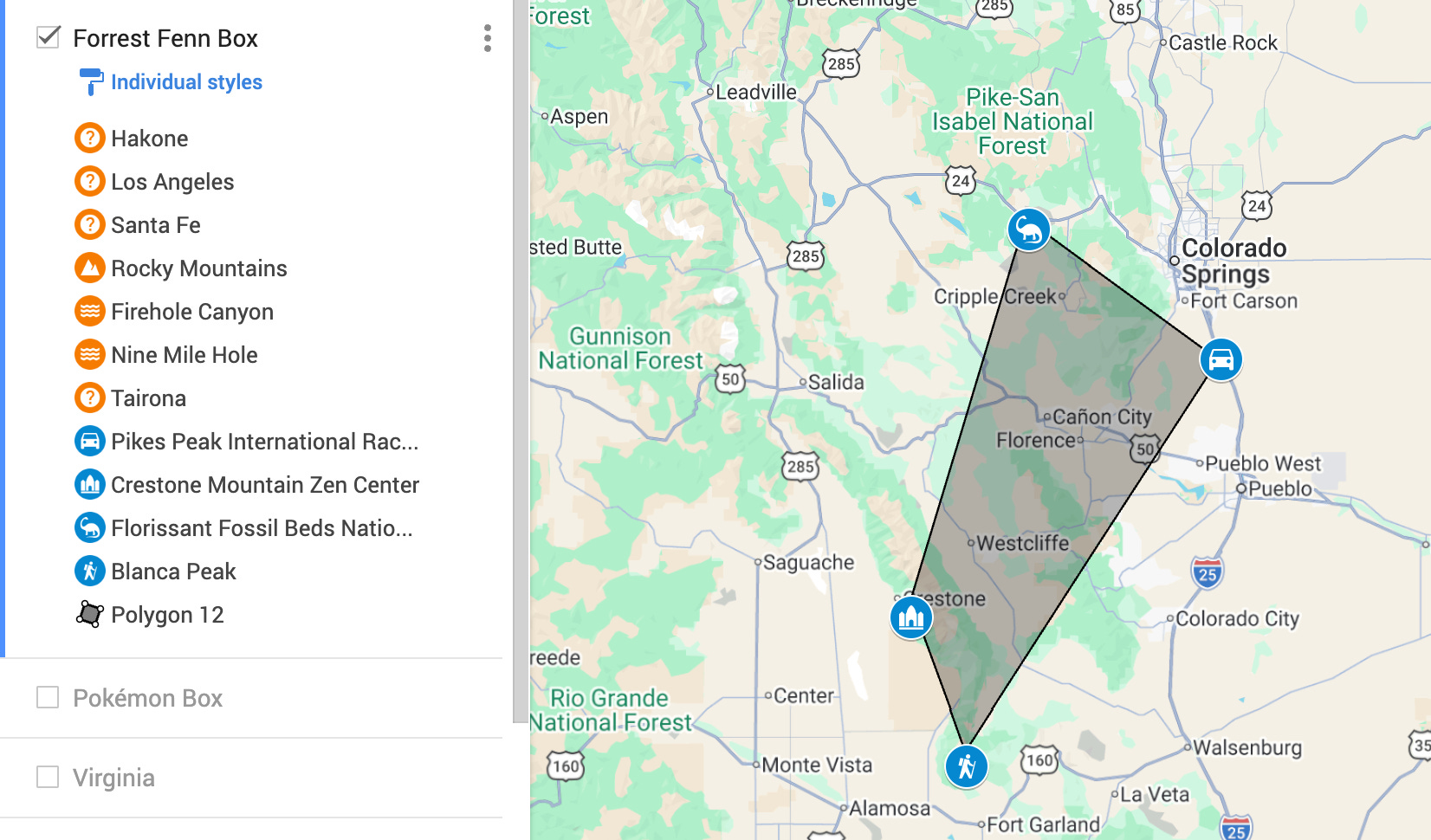
I’ve done some experiments looking for landmarks that fit the four ‘careers’ to try and map out a zone that maybe you are in the right spot if you know four places that could match are around.
So maybe as I look at this chapter and the poem, I’ll try to connect lines (or couplets) which might be the “clues” from the poem to parts of the text which might be the “hints” for understanding the clues.
Forrest Fenn drew a distinction between hints and clues - he said there were clues in the poem and hints in the book.